
Polynucleotides are an exciting approach in Regenerative Aesthetic Medicine, providing innovative treatments for skin rejuvenation, wrinkle reduction, and enhanced skin quality.
The benefits they offer are revolutionary, including:
Skin Regeneration
Wrinkle Reduction
Hydration
Anti-Inflammatory Benefits
Scar Healing
What are polynucleotides?
Polynucleotides in the simplest of terms are injectable, sterile and highly purified products, derived from fish, typically salmon or trout. The polynucleotides are then incorporated into a polymerised injectable gel, which once injected binds with water molecules to make skin tissue firmer and more hydrated.
Some people refer to them as “biostimulators” because the polynucleotide chain has an anti-free radical action and serves as a scavenger of hydroxyl radicals, which accumulate due to stress and UV radiation (sun damage). The hydration and anti-free radical properties of polynucleotides help to create the optimal environment for fibroblast growth, responsible for generating collagen, elastin, and hyaluronic acid, essential for resilient skin.
How do polynucleotides differ to injectable skin boosters, like Profhilo?
Polynucleotides and injectable skin boosters have similar effects, but rather than merely hydrating, like hyaluronic acid skin boosters such as Profhilo, polynucleotides actively signal cells to produce collagen and elastin. They address areas where many skin boosters cannot, such as the eyes, lips, and forehead.
Where are polynucleotides typically injected?
Polynucleotides can be effectively used for various facial areas including under the eyes, neck, and even the jawline and cheekbones. Currently, the most sought-after application tends to be the under-eye area.
The introduction of polynucleotides for under-eye treatment is revolutionising cosmetic procedures. Many doctors state that they have a significant number of patients who are concerned about their under-eye area and wouldn’t qualify for tear-trough filler due to under-eye bags or tissue elasticity issues, but thanks to polynucleotides, they can significantly improve this area.
Additionally, for individuals already receiving tear-trough filler for hollowing, incorporating polynucleotides into the treatment plan often allows for longer intervals between filler sessions.

(Image Courtesy of Gemini Aesthetics)
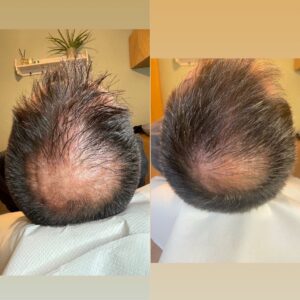
Plinest Hair Loss Treatment

Who are suitable candidates for polynucleotide treatments?
Polynucleotide contains animal-derived ingredients, making it unsuitable for vegetarians, vegans, or individuals with fish allergies. Additionally, it is not recommended during pregnancy or while breastfeeding, as is the case with any injectable procedures. However, due to its natural composition and versatility in application, it will be suitable for most patients.
Furthermore, a comprehensive medical history should be provided before proceeding with any aesthetic procedures.
What do polynucleotides treatments involve?
Polynucleotides treatment typically involves two to three sessions, spaced approximately two weeks apart, depending on the patient’s needs. Before administering the injections, the doctor will apply local anaesthetic cream to numb the area, and then inject the product into the targeted area of the face or neck.
For under-eye treatments, doctors tend to avoid using needles and opt for a blunt-tipped cannula inserted through a single point in the cheek. This technique helps minimise bruising and swelling in the area.
The procedure itself is relatively quick, and although there may be some discomfort during the injections, most patients tolerate it well.
When do you see the results of polynucleotides, and how long do they last?
Patients will begin to notice results quite soon after the initial session, but the second session jumpstarts the remodeling process. The product continues its effects for the first 12 weeks, progressively improving over time. However, patients will experience an early improvement and lift after the first session.
Typically, the effects of polynucleotide treatments last for approximately six months before requiring a maintenance session.